Why Testing Your Gloves Matters
When it comes to safety, your gloves are your first line of
defence. It protects you no matter what, whether you work in building construction, a manufacturing
unit, the chemical industry or even in a household. Ensuring your gloves are in perfect condition before
every use is crucial. But how do you know if your gloves are good to go? Don’t worry, we will teach you how to perform a DIY glove inspection before use
in a simple and effective manner so you feel confident on the job.
Conduct a Thorough Visual Examination
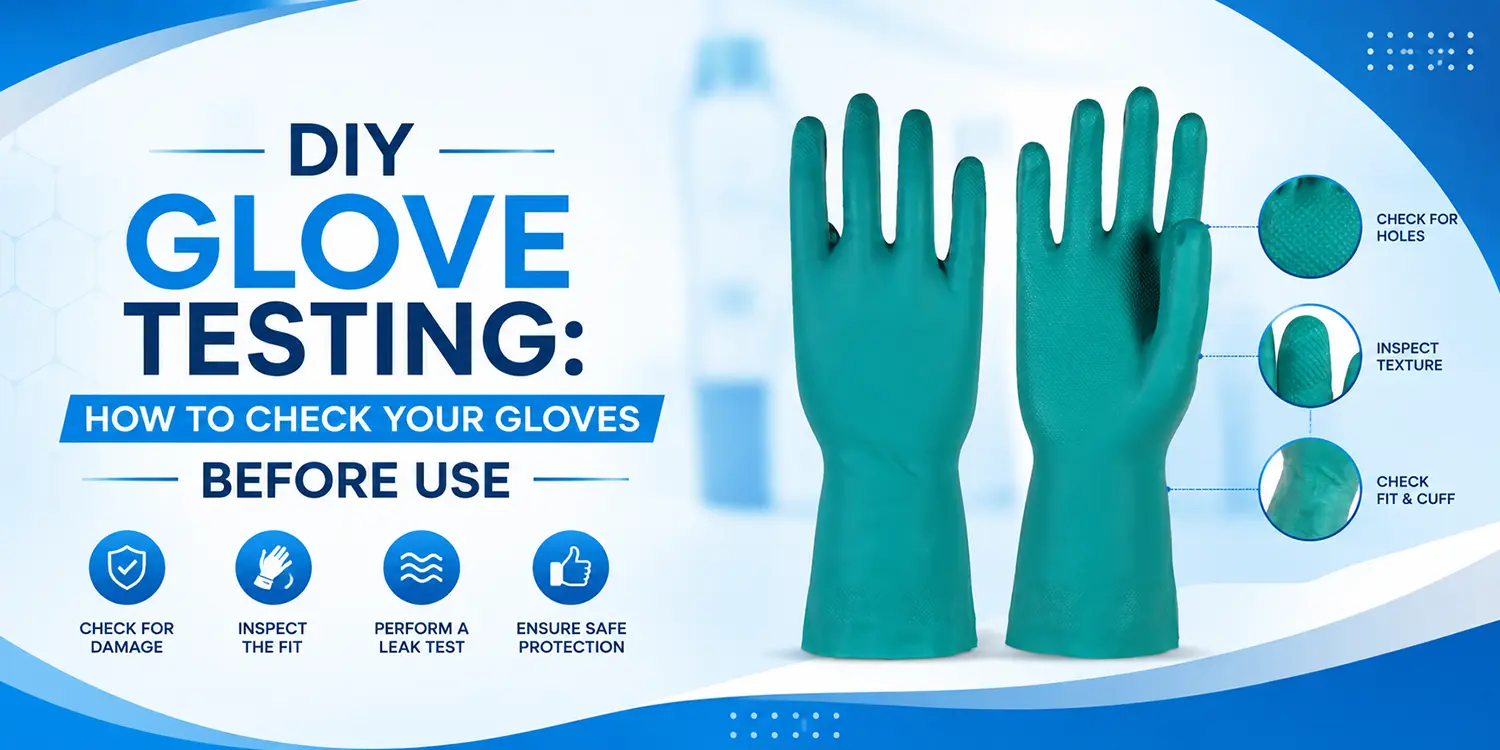
Before putting your gloves to any kind of work. Use glove damage detection techniques such
as careful visual inspection under good lighting, running your fingers along
the seams to feel for weak spots, and gently stretching the material to reveal
hidden cracks or thinning during your safety
glove visual inspection. Patiently check every minute detail because
sometimes even the tiniest hole can cause big trouble. Also, take a peek inside
the gloves. If you notice any sign of dirt, moisture, or any strange smells, it
could mean there’s damage.
Air test
Sometimes it is hard for human eyes to spot some tiny holes
that are not easily visible, and for that, this simple test can reveal hidden
holes or leaks that are not visible to the naked eye. To perform a glove integrity test, inflate the glove
by blowing air into it or sealing the opening and squeezing gently to conduct a
glove air leakage test. If there is
any kind of defect in the glove, you will hear a whistle or feel the air
escaping.
This method is very useful for electrical gloves, where even a tiny hole can be
the deciding factor for life and death.
Air test
Fill the glove with water and hold it
upright. Watch for any leaks or drips. This test is a great way to check for
punctures or thin spots that might not show up during a visual inspection,
making it an effective glove water leakage test.
Check the Fit and Flexibility
While wearing the gloves, try moving your fingers and hand inside the glove to assess glove fit and flexibility for safety. If there is a struggle performing it or the material is stiff or uncomfortable, then the glove may be faulty.
Tip: Proper fit also reduces the risk of
accidents caused by slipping or reduced dexterity.
Choosing internationally CE- certified safety gloves means you’re investing in reliable protection that stands up to the toughest conditions. CE certification is a mark of faith, quality, and safety.
At M.N. Rubber, we produce gloves in large numbers daily. The
certification is a proof that every pair is made with international standards.
Tips for Glove Care and Maintenance
Best practices for safety glove maintenance include
Regular cleaning with mild soap
· Keeping gloves in a cool, dry place away from sunlight
· Avoiding contact with harsh chemicals unless the gloves are designed for that purpose.
· Regular care with routine testing is necessary for your safety.
CONCLUSION
Your safety is in your hands. Taking a few minutes to perform routine safety glove testing before use can prevent serious injuries. No glove is invincible. That’s why you should choose your gloves wisely.
M.N. Rubber is a trusted name known for its CE- certified safety gloves, which means you are investing in quality and reliability. We perform every test firsthand to make sure each glove meets the international standards.
If you want to learn more about M.N. Rubber visit us at www.mnrubberindia.com
And explore our wide range of certified gloves and more products.